
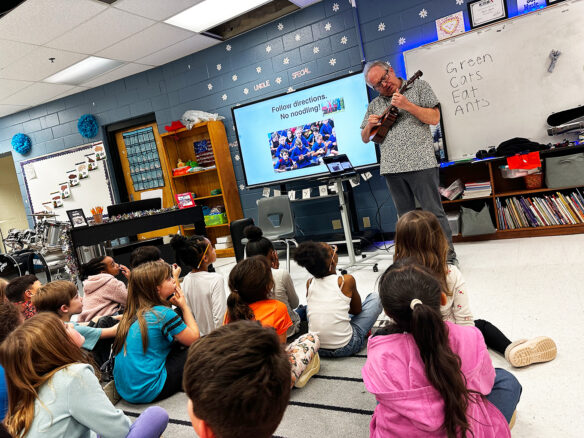
Kentucky Arts Council teaching artist Mick Jeffries works with students at Dixie Magnet Elementary (Fayette County). Photo courtesy Kentucky Arts Council
Students missing 10% or more of the school year, the standard definition of chronic absenteeism, often fall behind academically, experience gaps in social and emotional development, and face increased risk of dropping out. In Kentucky, chronic absenteeism is a significant barrier to academic success, especially for students in rural areas and those facing economic hardships.
When students are absent from school, they miss out on critical learning opportunities, making it harder for them to catch up. This gap becomes especially noticeable in high school, where attendance issues often correlate with declining grades and fewer opportunities for post-graduation success. This is a national growing concern, particularly in underserved communities where the impact of absenteeism can be even more severe. A variety of factors such as health issues, transportation challenges, family dynamics, and a lack of engagement with school can all contribute to students regularly missing school. Research suggests that integrating arts-based programs into school curricula can play a key role in bringing students to school.
A compelling example comes from the Motivation, Engagement, and Time in Schools (METIS) study conducted in New York, which examined how the arts can impact student attendance and engagement. Focusing on students from diverse socioeconomic backgrounds, the study found that schools with incorporated arts programs such as visual arts, music, theater, and dance into their curricula experienced significant improvements in both attendance and academic achievement.
The findings of this study offer valuable insights for Kentucky’s schools in combating chronic absenteeism and increasing student engagement. One of the most striking findings of the METIS study was the connection between arts education and student motivation. The study revealed that students who participated in arts activities were more likely to attend school regularly, participate in classroom activities, and demonstrate a greater sense of connection to their school community. The arts provided students with an outlet for creative expression, boosted their self-esteem, and helped them develop a sense of belonging — all of which are essential for increasing school attendance. Arts programs are inherently engaging and often provide a break from traditional classroom routines. For students struggling with more conventional academic subjects, the arts offer an alternative way to engage with learning. The hands-on, interactive nature of arts education makes it more appealing for students who might otherwise feel disconnected from school.
The arts can play a pivotal role in creating a positive school culture where students feel valued and appreciated. When schools offer creative outlets, students are more likely to feel a sense of pride in their work and in their school. This feeling of belonging can be a powerful motivator for regular attendance. In Kentucky, where schools in both urban and rural areas can experience cultural and resource challenges, the arts can help bridge gaps by providing students with a shared experience that transcends socioeconomic status.
Chronic absenteeism is often linked to issues such as bullying and isolation. Arts programs offer a safe space for students to communicate perspectives, develop social skills, and build resilience. The mental health benefits of participating in the arts can help develop coping mechanisms that encourage students to stay in school and engage with peers and teachers. Targeting students who are most at risk for chronic absenteeism with specialized arts programs can make a significant difference. These programs can serve as a gateway to increased engagement and regular attendance by providing a non-traditional, yet highly effective, method of learning and personal development.
The METIS study showed that students who participated in the arts had better academic outcomes overall. The skills learned through arts education, such as creativity, problem-solving and critical thinking, are transferable to other areas of study. When students are active in the arts, they are more likely to excel in other subjects, making them more likely to attend school regularly and take their academic responsibilities seriously.
Kentucky has a strong cultural heritage. Incorporating the arts into education can capitalize on this legacy while also addressing critical issues like absenteeism and student engagement. School districts are encouraged to utilize federal funding under Titles I, II, III and IV-A of the Every Student Succeeds Act (ESSA), Carl. D. Perkins Career and Technical Education Act, and the Individuals with Disabilities Education Act (IDEA) for arts education. Additionally, arts education grants and programs provided by the Kentucky Arts Council fund in-school teaching artist residencies and reimburse arts-related field trip opportunities for Kentucky schools. These grants and programs enable schools to collaborate with artists, musicians, and performers to bring authentic cultural experiences into the classroom and beyond, creating more dynamic learning environments aligned to the Kentucky Academic Standards for Visual and Performing Arts and exposing students to professional artists who reflect their own communities. Learn more about these and other Kentucky Arts Council grants and programs by visiting the Kentucky Arts Council website.
Cynthia Warner is the arts education director at the Kentucky Arts Council.

Leave A Comment