
If you’ve been in education for more than five minutes, you know we cycle through a lot of buzzwords. Personalized learning, 21st-century skills, grit, growth mindset – you name it. They come in hot, everyone scrambles to implement them, and then before you know it, we’ve moved on to the next big thing.
So when I first heard the phrase Vibrant Learning Experiences, I’ll be honest … I mentally put it in that same category. Another shiny phrase. Another initiative. Another thing to pin to the wall during a faculty meeting.
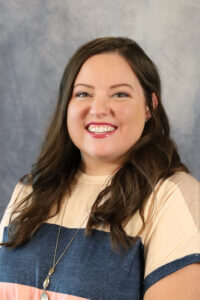
Jessica Talley, Mt. Washington Middle School (Bullitt County)
But the more I dug into it (and reflected on what was already happening in my classroom), the more it clicked. Yes, it’s technically a buzzword, but the heart of it isn’t temporary. The practice behind it will outlast my entire career because it’s rooted in what real, impactful learning looks like.
Learning that connects kids to the real world.
Learning that gives them voice and agency.
Learning that feels purposeful, to them, not just to us.
So now, when Kentucky talks about Vibrant Learning Experiences, I don’t think about the phrase at all. I think about those moments when students forget they’re “doing schoolwork” because they’re so wrapped up in the purpose of what they’re learning. We’ve all had those lessons where the energy shifts. The room feels different, the questions get deeper, and kids suddenly act like researchers instead of eighth graders counting down to lunch.
For me, one of the clearest examples of this has been my modern-day oppression and human trafficking unit.
I know – heavy topic.
But stick with me.
It has become one of the most meaningful learning experiences of the year, not because it’s perfect or polished (I haven’t taught it the same way twice in 14 years), but because students take it and turn it into something that truly matters to them.
Laying the Foundation
We begin with the basics: the facts, the context, and plenty of safety checks. It’s heavy, so students know we’re approaching it carefully and that every question and feeling is welcome.
Almost every year comes that moment, when someone realizes, “Wait … this is happening here? In Kentucky?” Shock turns into curiosity, and before long, curiosity becomes responsibility.
And that’s when the magic happens.
The room shifts. They stop asking, “Is this graded?” and start asking:
“Why don’t more people talk about this?”
“What can we actually do?”
“What difference can we make?”
To explore those questions, we bring in guest speakers and advocates willing to share their stories. We read survivor accounts, analyze systems that allow exploitation to continue, and even examine our own consumer habits – the clothes we buy, the products we use, the choices we make that can unknowingly fuel modern-day oppression.
Their focus moves from checking boxes to finding solutions, to discovering their own power. That’s when real learning takes off, when kids stop doing school and start doing something that actually matters.
Exploration and Ownership
As students dive into research, each one latches onto the piece of modern-day oppression that speaks to them. Labor trafficking. Online safety. Missing and exploited youth. Policies that allow trafficking to persist. Each pathway connects to their own questions, interests, or sense of justice; and suddenly, the learning becomes deeply personal.
Without even realizing it, they begin using every English language arts skill we’ve taught them: evaluating evidence, writing clearly, collaborating, asking better questions, revising, rethinking.
They don’t always realize they’re doing standards-based work, and honestly, that’s one of my favorite parts. Learning sneaks up on them, and engagement becomes more than a word on a poster.
Eventually, that research and reflection has to go somewhere; and that’s where this project comes in.
The Expo: Their Voices on Display
Some years, students choose podcasts or presentations. One year, they even planned a 5K to raise awareness and support a local nonprofit. But last year, they chose something truly hands-on: an interactive expo.
Inspired by the human trafficking exhibit at the Underground Railroad Museum in Cincinnati, they made their own version. Each group selected a type of modern-day oppression to raise awareness for, then brainstormed ways to make their displays interactive and impactful. Their audience wasn’t just classmates, it was the community: local leaders, first responders, parents, students, and other visitors who came to learn.
The goal was simple: raise awareness and spark reflection, in hopes that people might reconsider how they view the world as consumers, voters, and even potential victims.
Their creativity was incredible. Original songs. An “Operation”-style game to teach the realities of organ trafficking. A store display with price tags explaining how everyday purchases can support slavery. Interactive maps. “Choose your own story” safety scenarios based on situations in our own community.
Each exhibit wasn’t just a product, it was a conversation starter.
Watching students turn their learning into something tangible and meaningful is exactly what Vibrant Learning Experiences are supposed to feel like. And I’ll be honest: it’s hard as a teacher to step back and let them lead. You want to guide, protect, make sure it all works out. But some of the best moments happen when you let them own it. They take risks. They surprise you. They teach you things you didn’t know.
Why This Feels Like Vibrant Learning
Seeing students turn their learning into action – to teach, to challenge, to make people think – has changed my life as an educator. It shifted how I see my role. I’m not just there to deliver lessons or check off standards. I’m there to create space, provide tools, and step back so students can find their voice, their power, and their place in the world.
Every year, this unit reminds me why teaching matters.
It’s messy.
It’s emotional.
It’s uncomfortable.
But that’s exactly why it’s powerful.
The lessons go far beyond English language arts standards. They’re about empathy, critical thinking, citizenship, courage, agency.
I hope when my students look back on eighth grade, they remember it as the year they became advocates. The year they understood their role in the world — not just the year of “6-7.”
Vibrant learning, real learning, isn’t about completing a task or earning a grade. It’s about shaping humans who matter.
If we want students prepared not just for tests but for life, sometimes the best thing we can do is hand them meaningful work, get out of the way, and watch them rise to it.
Because that’s the kind of learning that sticks.
The kind that forms character.
The kind that can change the world, one student at a time.
Jessica Talley teaches English language arts at Mt. Washington Middle School in Bullitt County.

Leave A Comment