
 (FRANKFORT, KY) – Members of the Kentucky Board of Education (KBE) discussed science education in Kentucky, including a closer look at the Kentucky Academic Standards (KAS) for Science, how Kentucky’s assessment and accountability systems measure science proficiency, and student performance, during the virtual KBE meeting on March 4.
The science discussion is part of a larger effort by the KBE to hold virtual meetings to discuss board priorities, ask deep questions and expand board member learning on topics of strategic interest. Board members submitted questions in December that guided the presentation from Kentucky Department of Education (KDE) leaders about science education.
Board members discussed several aspects of science education and how to improve it in Kentucky, including the need for more professional development for educators because data presented during the meeting indicated students perform better in classrooms with teachers who utilize professional learning opportunities.
Micki Marinelli, KDE’s chief academic officer, reviewed the timeline and architecture of the current academic standards for science and discussed how the standards are informed by guiding principles determined by the review committees and advisory panels who craft the standards.
“Our KAS (for Science) places equal importance on knowing and doing science,” Marinelli said. “… It’s important that students not only master important science concepts, but that they’re engaging in those disciplinary practices to do the science.”
Marinelli said Kentucky has a process to revisit each set of academic standards every six years on a staggered schedule so they’re reviewed at different times. KDE coordinates the development of review committees and advisory panels, which are made up of educators who specialize in the content area. They review the standards and make recommendations for revision to the commissioner of education, the KBE and state legislators to consider.
Science standards were most recently updated when KBE members approved revisions in December 2022 for implementation in August 2023. Because of the statutory six-year academic standards review, Marinelli said the next time these standards are expected to be revised is in 2028.
Jennifer Stafford, associate commissioner of KDE’s Office of Assessment and Accountability, went over state and federal assessment requirements. This included an overview of the assessments Kentucky students take – including the Kentucky Summative Assessment (KSA) and the Alternate Kentucky Summative Assessment (AKSA) – which for science are administered to students in grades 4, 7 and 11. Her presentation also went over recent student data trends from the ACT college admissions exam and the National Assessment of Educational Progress (NAEP).
As part of the science standards and assessment presentation, Stafford explained how the science portion of the KSA and AKSA focuses on disciplinary core ideas, science and engineering practices and crosscutting concepts. She also explained that the Kentucky science assessments aren’t just a collection of individual questions, but rather a cluster of items based on real-world phenomenon that ask students to analyze the situation, apply scientific principles and solve problems.
How Graves County is Using HQIRs
Marinelli provided the board with information on how school districts are adopting high-quality instructional resources (HQIRs) for science that are aligned with Kentucky’s academic standards and how districts that have adopted HQIRs have seen student performance increase, along with some of the challenges to implementing HQIRs and the resources available for districts and educators to help with HQIRs.
HQIRs are materials that are:
- Aligned with KAS;
- Research-based and/or externally validated;
- Comprehensive to include engaging texts (books, multimedia, etc.), tasks and assessments;
- Based on fostering vibrant student learning experiences;
- Culturally relevant, free from bias; and
- Accessible for all students.
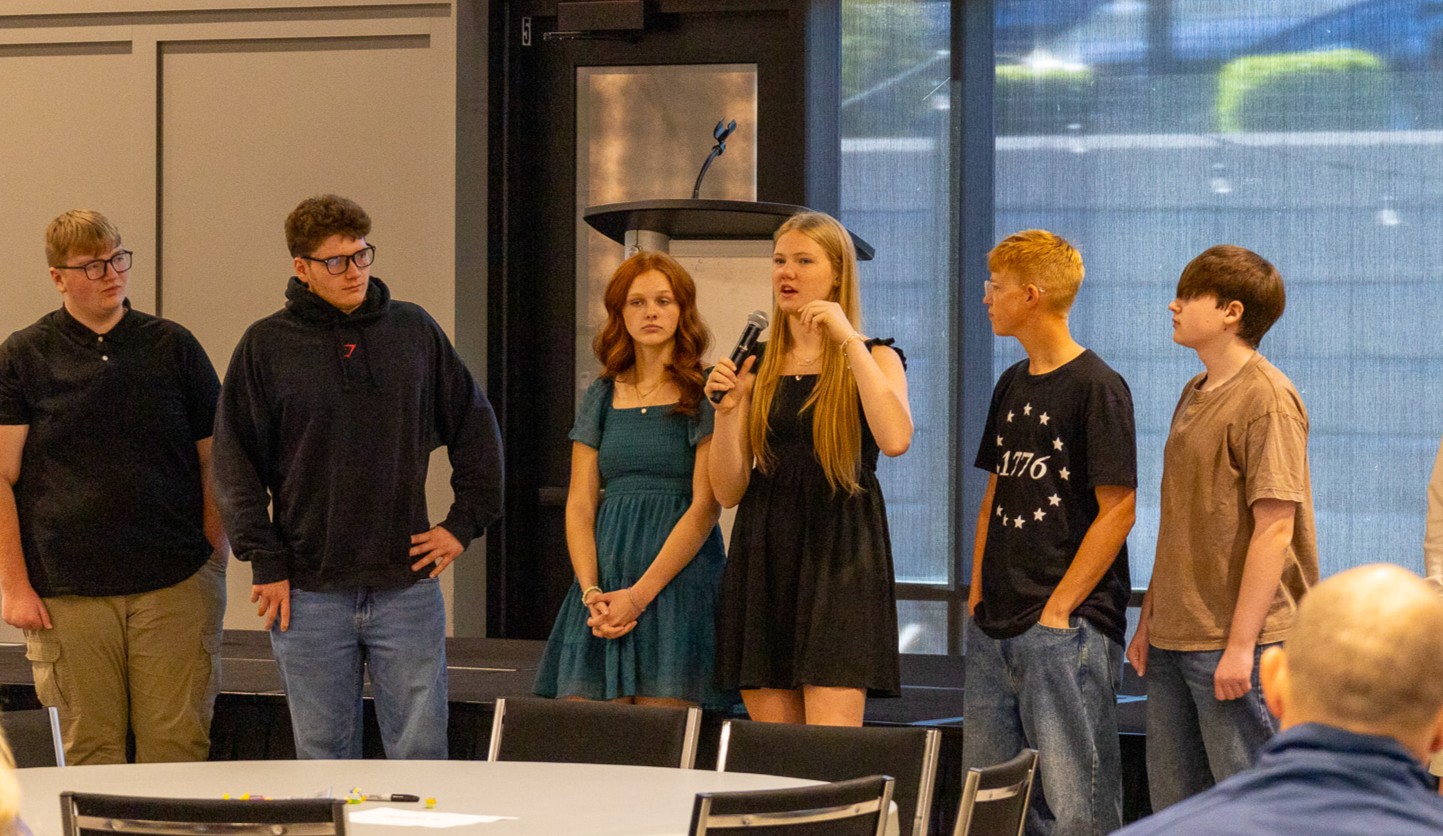
Marinelli invited educators from Graves County to discuss their district’s efforts to improve science with board members. Amanda Henson, elementary instructional supervisor for Graves County, explained how the district sought to expand learning through district-wide alignment and have students demonstrate excellence in academic achievement through high-quality, engaging experiences.
District representatives talked about how they adopted Open SciEd as the district’s HQIR in 2020 and the gradual implementation process they followed, along with the professional learning opportunities they participated in to bolster their HQIR implementation.
Henson said one of the important aspects of their HQIR implementation has been professional learning communities (PLCs) with the district’s middle and high schools that meet each month to internalize units and lessons and analyze student data to better understand how to teach science standards.
School leaders said the PLCs also focus on how students are engaging in the lessons, which include a focus on phenomena-based instruction where students learn about science through analysis of real-life situations.
“This phenomena-based approach has really been helpful in teaching the next generation of scientists,” said Lindsey Hargitt Cary, a 4th-grade teacher at Sedalia Elementary (Graves County). “They’re gaining real life skills and application through that anchoring phenomena and hands-on experiences.”
KBE Member Lee Todd commented on the importance of professional development during the discussion.
“I’d really like to get data that we could use to go to the legislature and show that this phenomenon-based approach really works,” Todd said. “We must have professional development support to get this going and I don’t think we’ve got it.”
Board members also asked about the circumstances that led to the district’s recent efforts to improve science, along with how students and parents have responded to the new science lessons.
“Can we just bottle you up and take you everywhere to help us all see learning in science in a way that really embraces all students and gives all students a chance to know that they can learn science,” said KBE Chair Sharon Porter Robinson.
The next in-person KBE meeting is scheduled for April 8-9.
“We will be continuing our efforts to drill down on issues of student achievement, including perhaps incorporating more committee work dedicated to that,” Robinson said.
Leave A Comment